
Leadership Development Program Helps City Halls Negotiate Better Results for Residents
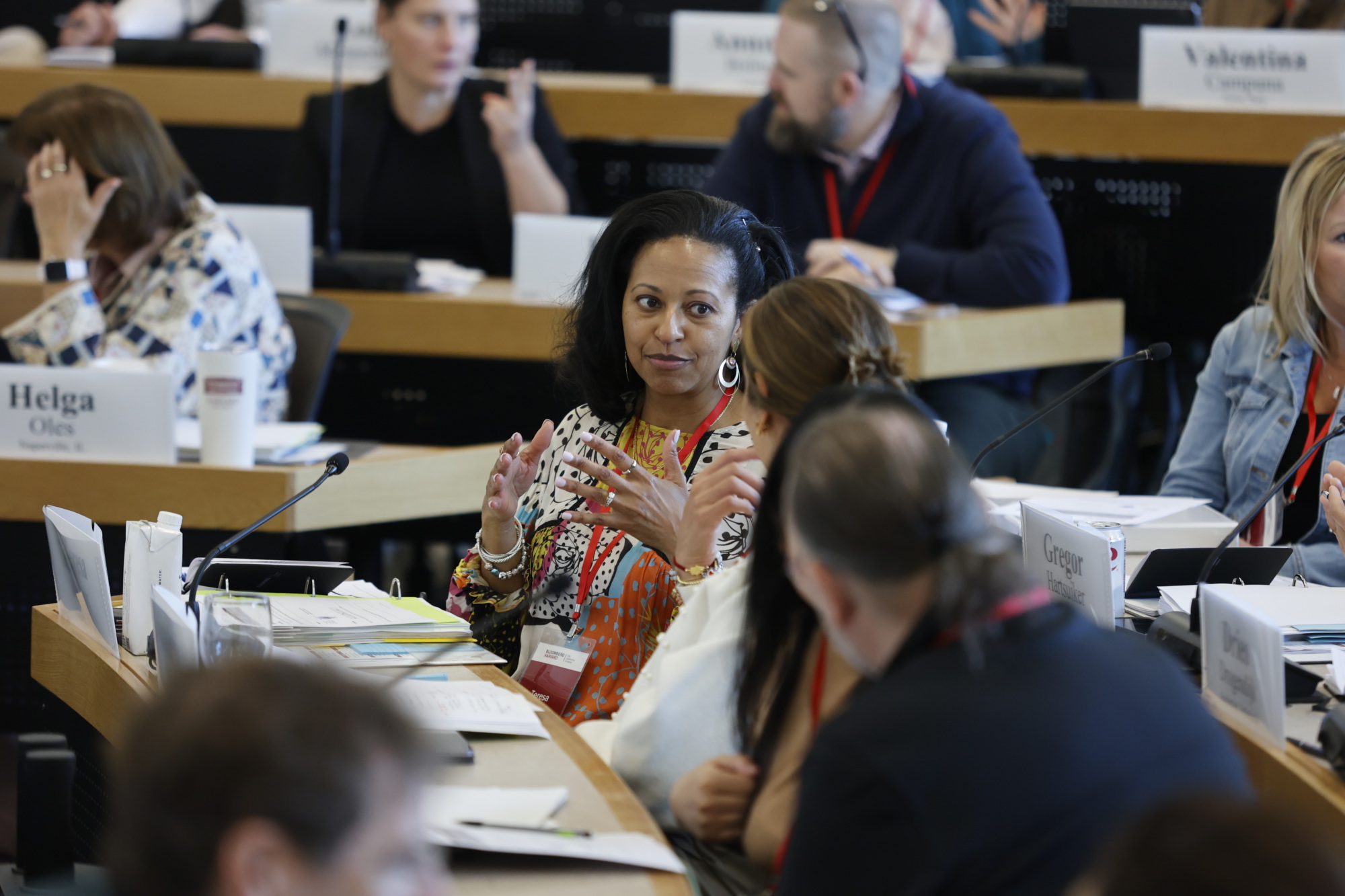
Through the Bloomberg Harvard City Leadership Initiative, 24 city administrations are honing strategic negotiation capabilities to deliver better outcomes for residents.
Cambridge, Massachusetts (August 20, 2026)—Cities in Montana and Colorado are working to make state roadways safer for the community. Argentina and Massachusetts city halls are developing waterfront land into housing, public space, and stronger urban connections. A Louisiana city seeks a sustainable path forward on a costly sewer agreement, and an Alaska city looks for improved value from downtown sports and arts facilities that aren’t providing expected revenue.
The projects are different, but for the public officials in Harvard classrooms this summer, success depends on the same strategic leadership skill: negotiation. When city leaders build their abilities to reach better agreements, they can deliver improved outcomes for their communities in addressing priority issues like housing, redevelopment, infrastructure, fiscal sustainability, and public trust. Negotiation for City Leaders, a program offered by the Bloomberg Harvard City Leadership Initiative, brought city teams to Cambridge for an intensive week-long learning experience with Harvard Kennedy School faculty co-chairs Brian Mandell, Monica Giannone, and Robert Wilkinson.
Through case studies, simulations, and team working sessions, participants learned frameworks and practical tools to understand the negotiating environment, anticipate barriers, navigate conflict, and make progress on high-priority challenges in their cities. The curriculum uses teaching cases that progress from foundational concepts to complex, multiparty negotiations drawn from the realities of city leadership.
Each team arrived with a priority negotiation challenge and workshopped through the week, gaining expert advice to advance their planning. Across the cohort, cities from very different regions wrestle with similar questions tied to the future of their municipalities and the need to maximize value of public dollars for the community.
- In Rosario, Argentina, city leaders are planning the future of Puerto Norte, a waterfront area owned by the national government that the city hopes to transform into a mixed-use district with housing, public spaces, and stronger infrastructure.
- In Lynn, Massachusetts, leaders are also advancing a waterfront project, forming plans to deliver jobs, housing, and open space that require negotiations tied to former industrial parcels.
“Transforming Lynn’s waterfront will take more than a strong vision—it will take strong agreements. The Negotiation for City Leaders program challenged our team to think differently about problem-solving, prompting us to break down complex long-term initiatives into discrete deals that we can prepare for today. Revisiting the advocacy that brought the Green Line Extension to Somerville was instructive in just how wide of a coalition we can and should be building for our waterfront, and got us backward mapping our own vision for redeveloping underutilized land into transit-oriented, community-driven development into actionable steps for today.”—Lauren Drago, Associate Planning Director, Lynn, MA
Other teams are focused on redevelopment as well, addressing downtowns, corridors, and public assets that need improvement to serve their communities better.
- Columbia, South Carolina, is working to redevelop city-owned downtown properties in ways that support growth and create a repeatable model for future projects.
- Des Moines, Iowa, is pursuing the revitalization of a former mall site as a regional hub, a project that requires coordination across multiple levels of government as well as the private sector.
- Turin, Italy, is preparing a new urban master plan including the redevelopment of former industrial sites.
For Arvada, Colorado, and Missoula, Montana, the shared challenge is road safety. Arvada wants to make improvements to its high-traffic Indiana Street corridor in ways that accommodate residents, new development, and emergency response needs but requires agreement with the state and a railroad operator. Missoula seeks to redesign a state-owned roadway that now serves neighborhoods, schools, transit riders, pedestrians, and cyclists. Through better negotiations, both cities seek to make infrastructure designed around one set of priorities serve the daily needs of a changing city.
Some team projects focus on public value and fiscal trust. Cleveland, Ohio, is working to negotiate the future of sports facility upkeep in ways that protect taxpayers and ensure residents see clear benefits from public contributions. Anchorage, Alaska, is renegotiating contracts for sports and arts facilities that are important to downtown vitality but have created financial strain and concerns about long-term sustainability. Shreveport, Louisiana, is seeking a more sustainable arrangement for an expensive federal sewer consent decree.
“There’s real energy in the room when city leaders come to work with faculty who are dedicated to helping people become better negotiators,” said the program’s faculty co-chair, Monica Giannone, who also directs Harvard Kennedy School’s Negotiation and Conflict Resolution Collaboratory. “Program participants spend their careers negotiating—funding, contracts, disputes—but don’t often benefit from tailored learning and the space to workshop their own cases. We built this program around the problems cities face every day, so these leaders don’t just pick up techniques. They head home with a sharper understanding of the challenges they’re facing and the system they’re operating in, tools for capability building in their city hall teams, and strategic plans for an ongoing negotiation. That’s how the learning endures and reaches the residents they serve.”
An applied approach is central to the Bloomberg Harvard City Leadership Initiative’s work: giving city leaders time, tools, expert support, and a peer network to step back from urgent pressures, examine the negotiations shaping their highest-priority work, and return home with a clearer path forward.
“The faculty’s expertise and practical insights challenged us to think differently about leadership, negotiation, coalition-building, and public problem-solving. Learning alongside public leaders from different cities, countries, and professional backgrounds enriched every discussion and provided valuable perspectives that will continue to influence our work. The program provided us with practical tools, new ways of thinking, and renewed inspiration. We returned home energized and committed to applying these lessons in service of our city and its residents.”—Felipe Montoya, Executive Vice President, Metrocali, Cali, Colombia
Learn to Negotiate Better
Action Insights: Eight Types of Power City Leaders Can Use When Negotiating
Explore the ways formal, informal, and mixed forms of power shape negotiations, and how city leaders can use them effectively.Simulation: Practice Negotiation with a Real-world Scenario
Learn how coalitions form, interests evolve, and agreements take shape with the seven-party Galvis City Schools Collective Bargaining Simulation. Access the full set of materials—including participant briefs and an educator guide for instructors—to run the exercise with your team.Teaching Case Set: Build Negotiation Skills Through Practice
Explore a set of teaching cases on negotiation designed to help current and future city leaders build capacity through analysis and hands-on application. Use them to strengthen negotiation skills in city halls, classrooms, or trainings.Teaching Case: In the Green: Negotiating Rail Expansion in Somerville, Massachusetts
Access a case used in the classroom to learn about activating stakeholders and negotiating competing priorities.