


Calling Gilgamesh: A Reading and Conversation on Humanity, Cities, and the Future

AN EVENT OF THE BLOOMBERG CENTER FOR CITIES


4:00 p.m. EST
Bloomberg Center for Cities, Taubman Third Floor, Harvard Kennedy School

About the Event

As societies confront climate change, technological disruption, and growing questions about humanity’s relationship with the natural world, stories can help us make sense of change and imagine new futures.

“Calling Gilgamesh,” a new play by Gloria Benedikt, brings together two writers separated by more than four thousand years to explore some of humanity’s most enduring questions. Set in 2026 BCE and 2026 CE, the play follows a contemporary author commissioned to write a new epic for humanity. In search of inspiration, she connects with one of the authors of the Epic of Gilgamesh, the world’s oldest known literary masterpiece. Their conversation spans millennia, examining the rise and fall of cities, humanity’s relationship with nature, and the role of storytelling in times of uncertainty and transformation.

This scenic reading—the first public presentation of the play—will be followed by a discussion exploring themes that resonate across disciplines, including urbanization, environmental change, democracy, technology, and the future of human civilization. Reflecting the Bloomberg Center for Cities’ commitment to bringing diverse perspectives to questions facing cities and society, the conversation will explore what the past can teach us about navigating the challenges ahead.

The program will include a 70-minute scenic reading followed by a discussion and reception.

Virtual event open to all. In-person event open to all Harvard University ID holders. Registration is requested as space is limited.

We welcome individuals with accessibility needs to participate in our events. Contact us at events@cities.harvard.edu to request accommodations or if you have questions.

Speakers

Gloria Benedikt

Research Artist & Stage Director

Gloria Benedikt graduated from the Vienna State Opera Ballet Academy, English National Ballet School, and Harvard University. In 2015, she joined the International Institute for Applied Systems Analysis (IIASA) to explore how partnerships between scientists and artists can support the transformation toward sustainability. She is the lead author of Science and Art for Life’s Sake (2020). In 2021, she was a Visiting Fellow at the Institute for Human Sciences (IWM), where she explored how we can harness the power of collective experience through the performing arts to support societal transformation. In 2022, she became an independent consultant to the Human Frontier Science Program (HFSP).

Benedikt has had a successful career as a dancer, performing throughout Europe and the U.S. for over two decades. Since 2013, she has co-produced and directed numerous multimedia performances. She has presented her work at international institutions and conferences, including the UN SDSN International Conference on Sustainable Development, the European Parliament, the UNESCO Forum, the World Science Forum, the European Culture Forum, Institute de France, Harvard University, as well as theaters and festivals such as the Kennedy Center Washington, Carnegie Hall, and the Bridging Europe Festival. She has co-curated the UN Concert for a Sustainable Planet. In 2023, one of her productions was selected for the EU guest of honor program in Mexico, and in 2025, one of her works was chosen for the EU concert at the World Expo in Japan.

Teaching assignments include the Mellon Summer School for Performance Research at Harvard University, the School for Modern Diplomacy co-organized by the United Nations University and the Diplomatic Academy Vienna, and the IIASA Young Scientists Program. ​
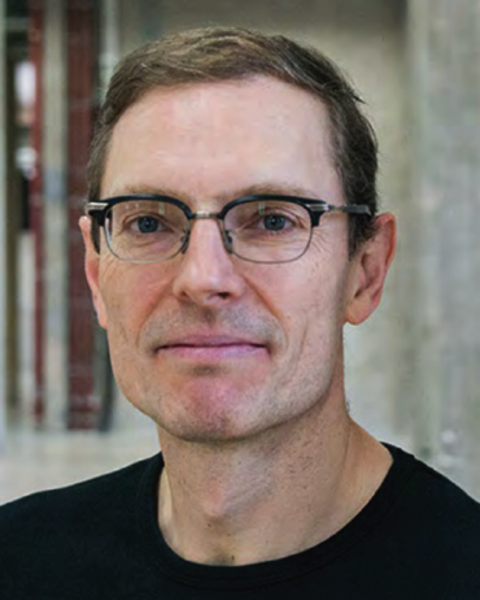
Martin Puchner

Martin Puchner

Byron and Anita Wien Professor of Drama and of English and Comparative Literature, Harvard Faculty of Arts and Sciences

Martin Puchner is Byron and Anita Wien Professor of English and Comparative Literature at Harvard, where he also founded the program in Theater, Dance, and Media. In addition to developing several online courses, he has run an annual summer school in performance and media funded by the Mellon Foundation. At VPAL, he has served on the Task Force for the Future of Teaching and Learning and on the VPAL Council, and is particularly interested in short-form content.

In addition to his work in online education, he is a prize-winning author and public speaker. His best-selling “Norton Anthology of World Literature” has brought 4000 years of literature to students across the globe. His book “The Written World,” a Wall Street Journal bestseller, has been translated into some twenty languages. The “Language of Thieves” interweaves family memoir with a reflection on Rotwelsch, the underground language of Central Europe, which he learned from his father and uncle. His new book, “Literature for a Changing Planet,” draws lessons from world literature for addressing climate change.

He is a member of the European Academy and has received numerous awards, including a Guggenheim Fellowship, a Cullman Fellowship, the Berlin Prize, the Humboldt Prize and the Massachusetts Book Award.

Stay up to date on our latest work to improve cities