
From Research to Action: Violence Against Women in Local Office

AN EVENT OF THE BLOOMBERG CENTER FOR CITIES


10:30 a.m. EST
Virtual

About the Event

Women mayors across the U.S. face widespread harassment, threats and intimidation. This panel sheds light on who is experiencing it and how, what it means for local leadership and democratic representation, and what cities and organizations are doing about it.

Virtual event open to the public. Please register to receive the Zoom link.

We welcome individuals with accessibility needs to participate in our events. Contact us at events@cities.harvard.edu to request accommodations or if you have questions.

Speakers

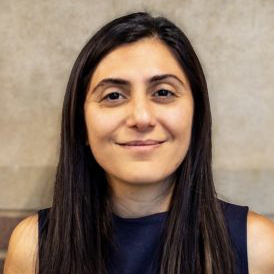
Nazita Lajevardi

Nazita Lajevardi

Associate Professor of Political Science, University of Michigan

Dr Lajevardi’s scholarship examines political discrimination, focusing on religion, race, and ethnicity in American politics, as well as political behavior, voting rights, and immigration. She is the author of “Outsiders at Home: The Politics of American Islamophobia” (Cambridge University Press, 2020), and her research has appeared in leading journals including the American Political Science Review, The Journal of Politics, and Political Behavior. A former postdoctoral fellow at Uppsala University and Winant Professor at Oxford, she has studied how hostility and violence shape who stays in politics, including in the United States and Sweden. She is co-pi of the funded Bloomberg violence against women portfolio and co-author, with Sandra Håkansson and Kelsey Osborne-Garth, of a forthcoming Cambridge Element on violence against local politicians and its consequences for political representation, with a focus on women of color.

Kim Norton

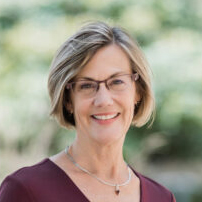
Kim Norton

Mayor of Rochester, Minnesota

Kim Norton is the Mayor of Rochester, Minnesota, the first woman to hold the office. She was elected in 2018, took office in January 2019, and was reelected in 2022. In March 2026, she announced she would not seek a third term, concluding nearly 26 years in elected public service.

Before becoming mayor, Norton represented District 25B in the Minnesota House of Representatives for a decade, where she authored the legislation establishing the Destination Medical Center, a large-scale economic development initiative tied to Mayo Clinic that has since helped position Rochester as a center for health care. She began her career in public office on the Rochester Public School Board, including a term as chair.

As mayor, Norton has secured more than $100 million in infrastructure investment for the city and led improvements to its parks and trail system. She holds leadership roles with the National League of Cities, the U.S. Conference of Mayors, and the Mayors Innovation Project, and has worked closely with Bloomberg Philanthropies on municipal leadership initiatives. She holds a Bachelor of Science from the University of Nebraska-Lincoln and completed a master’s degree in public policy at the University of Minnesota’s Humphrey School of Public Affairs as a Bush Fellow.

Katie Wells

Katie Wells

Program Manager, North America Regional Hub at the Strong Cities Network

Katie Wells provides prevention training, guidance, and support to mayors, city council members, and senior city officials across the United States, helping city leaders identify targeted violence and related threats, understand the needs and vulnerabilities in their communities, and apply a public health approach to prevention and response. She also manages a global initiative to address hate and harassment targeting women local officials. The initiative builds on the work of the Network’s Women’s Caucus, launched in 2024, and aims to deepen understanding of the threats facing women local leaders and co-create practical tools to support them, their teams, local governments, and communities. Before joining the Strong Cities Network, Katie was Senior Policy Advisor to Mayor Andy Berke of Chattanooga, Tennessee, where she helped coordinate the response to a violent extremist attack and led the Council Against Hate, which works to understand and address the factors behind hate, extremism, and polarization.

Stay up to date on our latest work to improve cities