
Big Bets and Green Gains: How Mayor Anne Hidalgo Transformed Paris
At Bloomberg Philanthropies’ CityLab 2026, former Paris Mayor Anne Hidalgo described how city-wide changes paired with neighborhood wins worked together to improve daily life for residents.
Madrid, Spain (May 20, 2026)—From the Mayors Innovation Studio stage at Bloomberg Philanthropies’ annual CityLab convening, former Paris Mayor Anne Hidalgo joined Jorrit de Jong, the Director of the Bloomberg Center for Cities at Harvard University, to reflect on how she used both big bets and small wins to transform the City of Light.
Speaking to an audience of city leaders from around the world, she described how residents’ concerns about air pollution led her to campaign on urban transformation and, once in office, to redesign the city around the daily lives of people and families, creating healthier public spaces and better access to nature. As mayor, she said, “It’s so important to change our common life for better.”
Many Steps to a Large Goal
Hidalgo began with a blunt diagnosis: Paris was polluted, and cars were to blame. The solution? Reduce car traffic. It sounded simple enough, but making that a reality, she said, meant a “horrible, tremendous” fight with entrenched interests: lobbies invested in maintaining the fossil fuel-powered, car-centered city. The mayor had to navigate opposition even as she took steps toward her objective by eliminating parking spaces, creating low-emission zones, banning diesel engines from parts of the city, and changing traffic patterns.
Big Bets: Reclaiming the Seine and the Riverbanks
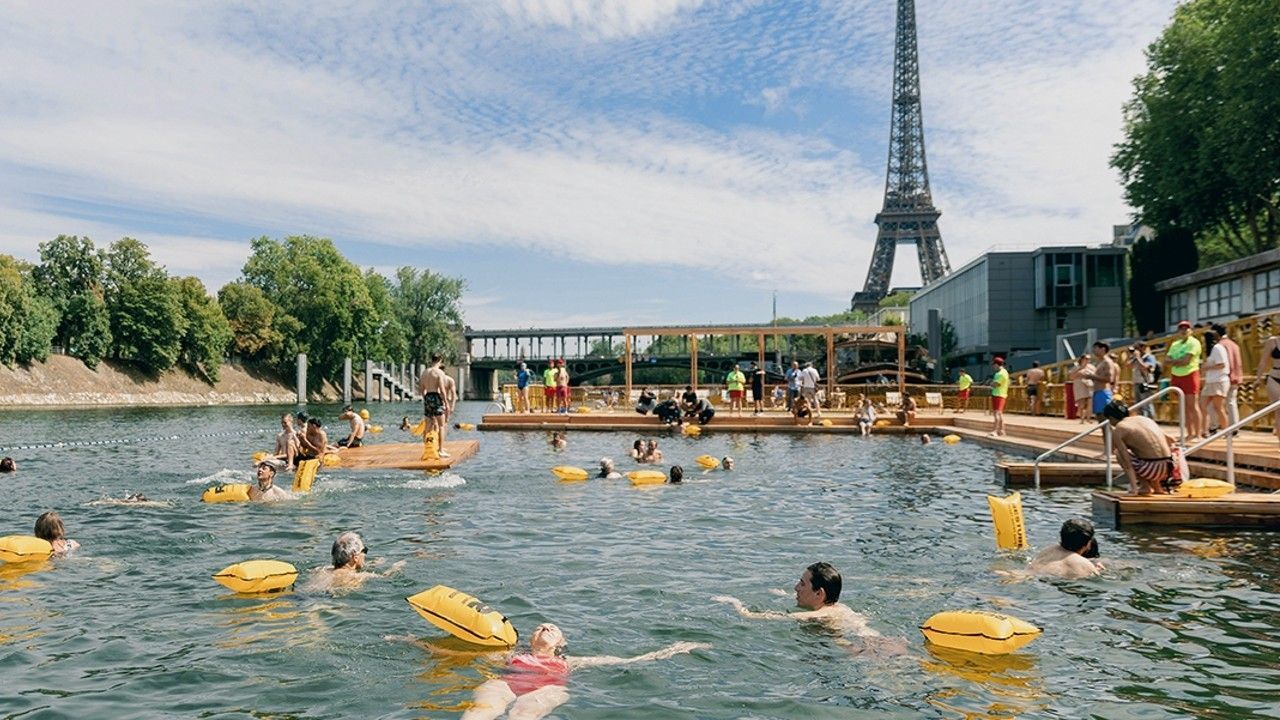
One of Hidalgo’s most ambitious goals was to reclaim the Seine riverbanks, where roads once carried 40,000 vehicles a day, and ultimately make the polluted river swimmable. Paris’s successful bid for the 2024 Olympic Games helped turn that aspiration into a deadline and unlock national funding that Hidalgo said would have been impossible to secure otherwise. Residents, private-sector allies, urban planners, architects, and NGOs also helped advance the work.
Despite public skepticism, Hidalgo marked the project’s success on July 17, 2024, when she swam in the Seine herself, nine days before the Olympic torch was lit. The revitalized river served as the global stage for the Opening Ceremony. By summer 2025, Hidalgo said, 100,000 people had swum in the Seine for free—fulfilling her vision of the river as a clean, sustainable public space.
To make transformative ambitions real, the mayor also needed to change the way city hall worked. Within a 55,000-person administration, she brought in young architects, designers, and people from the nonprofit and advocacy worlds. She emphasized frugality and reuse—changing materials and methods—so that seven major squares could be refurbished with the budget once spent on a single plaza. For major public spaces like Place de la Nation and Place de la Bastille, she organized public workshops, giving residents a voice in the historic locales’ renovation. “It’s interesting,” de Jong said, “that setting ambitious goals and strong leadership from the top can still go hand in hand with participatory decision-making.”
Improvements Residents Can See and Feel
To gain public support and help sustain larger initiatives, Hidalgo delivered local improvements to parents and children across the city. Paris has about 600 nursery and elementary schools, and Hidalgo set out to improve streets around roughly half of them—first by closing or restricting car access, then by working with locals to co-design some of the streets with trees, play space, and safer public areas for children. “The teachers, the parents, the community said, ‘okay, we want to design that with you,’” Hidalgo said, noting that the projects attracted zero opposition. In fact, parents’ groups clamored for the city to get to their neighborhoods and deliver each of them their own “street for schools.”
Neighborhood successes helped build trust that larger changes—like low-emission zones and parking removal—would also deliver real benefits.
Facing Pressure and Finding Support
Hidalgo was candid about resistance, including gender double standards: “When it’s a man, it’s authority. When it’s a woman, it’s authoritarianism. … When it’s a man, it’s decisions, and when it’s a woman, it is impulsiveness.” She reacted by grounding her leadership in resident support, especially among young people and women, and by building alliances with the business and design communities, nonprofits, and the national government.
Participation was a method as well as a value. The city ran workshops with residents and children and organized votes on issues like taxing big cars to involve resident voices directly in more projects.
Leadership Takeaway: Pair Ambition with Visible Benefits
From the CityLab stage, Hidalgo urged mayors to adopt her two-level strategy, blending large-scale, ambitious projects with small-scale ones that benefit people in their day-to-day experience. “This is not just about design craft,” de Jong noted, “but also about legal craft, financial craft, political craft, and communications craft.” Hidalgo reminded listeners that mayors are “special politicians … connected with real life,” and encouraged them to “be confident in your intuition and in your inspiration.” For leaders in large and small cities, the Paris example shows how small, co-created wins can build the trust and political environment needed to deliver truly transformative change.